
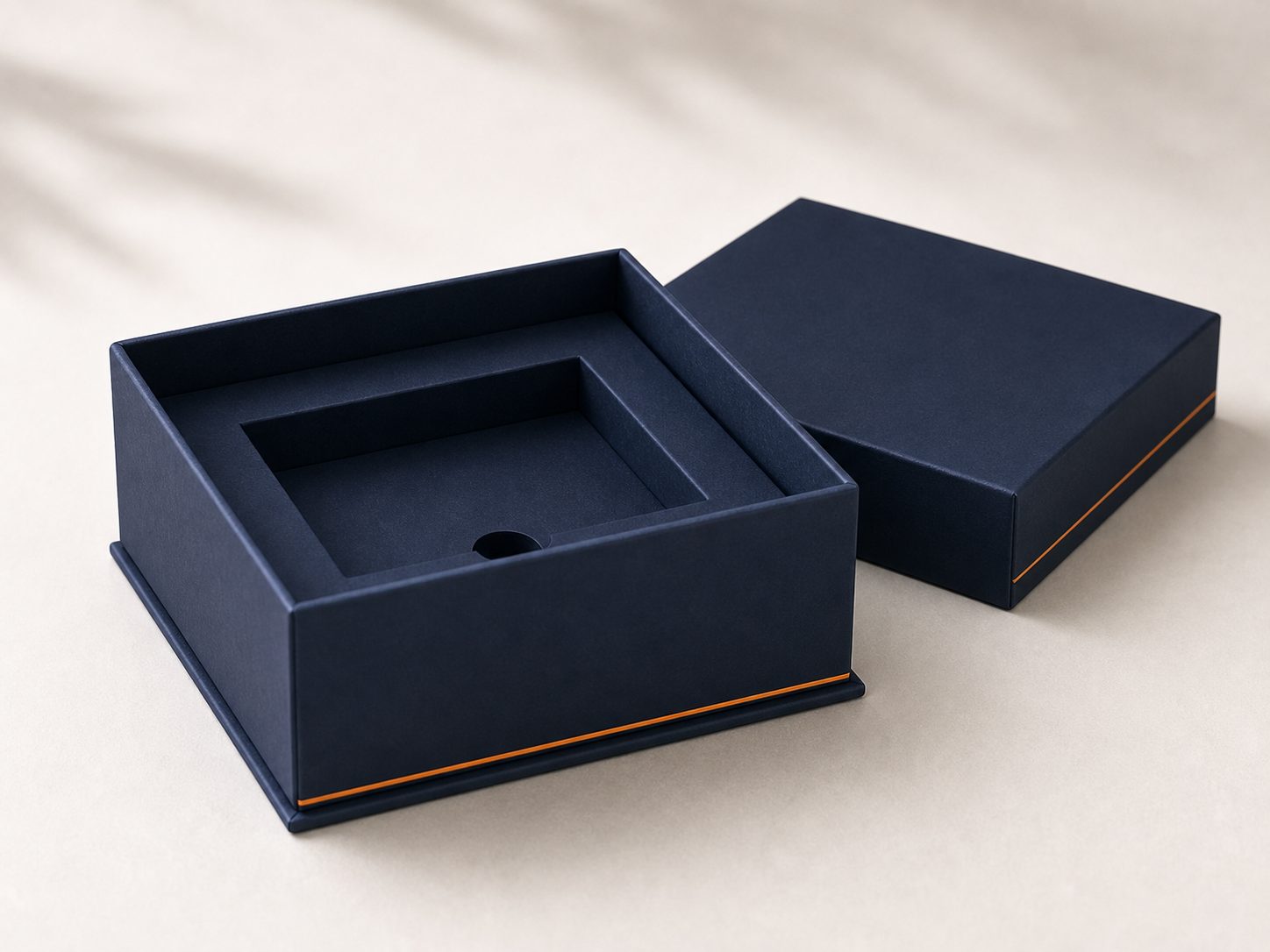
Folding cartons are efficient for retail programs, while rigid boxes support stronger presentation and higher perceived value.
Use the points below as a sourcing checklist before requesting samples or confirming mass production.
Construction and presentation
Folding cartons are printed paperboard sheets that are die-cut, creased and shipped flat. Rigid boxes use thick greyboard wrapped with printed or specialty paper and normally arrive pre-assembled.
The rigid format gives more edge strength and a slower unboxing experience, while folding cartons use less storage and freight volume.

Cost, packing and order scale
Folding cartons usually suit repeat retail programs because printing, die-cutting and gluing can be automated after setup.
Rigid boxes involve more board, wrapping and assembly work. Compare unit cost together with freight volume, packing labor and the value of the product being presented.

How to choose between them
Use a folding carton when efficient retail packing, shelf display and compact shipping matter. Choose a rigid box when protection, gifting and premium presentation justify the extra material and assembly.
Before approval, test product fit, insert retention, opening force, scuff resistance and the condition of packed samples after transport handling.
Sample and approval checkpoints
Use a structural sample to verify size and fit, then a printed sample when color, material and finishing need approval. Record the accepted specification so production is checked against the same reference.
- Confirm dimensions and product fit
- Approve material, print color and finishing
- Confirm packing method and master-carton details
- Keep one approved reference for production QC
Information to send for quotation
A useful inquiry gives the supplier enough information to recommend a realistic structure and production route.
- Product dimensions, weight and reference photos
- Target quantity and expected reorder plan
- Artwork status, colors and required finishes
- Delivery country, target date and confirmed compliance notes
Send your product details and target market so Jiahui Printing can review structure, material, finishing and export packing together.